Garden Clearance in Kilburn
Garden Clearance Kilburn offers a practical way to clear overgrown, cluttered and difficult outdoor spaces in Kilburn, with a service built around removing unwanted garden waste and bulky items so the area can be used properly again. The work can include soil, branches, cuttings, broken outdoor furniture, old plant containers and mixed garden debris, alongside the tidying-up needed to leave the site ready for the next step. We keep the service focused on the actual clearance task, with straightforward handling of the materials you want taken away.
Our garden clearance approach is suited to front gardens, back gardens, shared outdoor spaces and properties where the outdoor area has become hard to manage. It is a sensible option when a one-off clear-out is needed after pruning, renovation or a change in how the space is used. We can clear a single heavy load or several separate piles, depending on what has built up. If you are planning work in Kilburn, start with the items that need to go and then ask for a quotation.
Because every garden has a different layout and condition, the service is best planned around access, volume and the kinds of materials involved. A good clearance does not need unnecessary disruption; it needs a careful approach to sorting, moving and removing waste so the outdoor area can be left in better order. If you want to arrange it, send a brief description of what is there and request a quotation when you are ready.
What our garden clearance service covers
Garden clearances often begin with the obvious waste, but the real value is in handling the mixed material that tends to gather over time. That may include hedge trimmings, leaves, weeds, branches, turf, plant pots, bags of old compost, damaged trellis and broken garden ornaments. We can also deal with light outdoor clutter that no longer belongs in the space. The service is designed to remove the load efficiently while keeping the work proportionate to the amount of material present.
For some properties, a clearance is mainly about cutting back growth and taking the resulting waste away. For others, it is more like an outdoor declutter, where the garden contains a combination of organic waste and redundant items. We handle that mix carefully so you do not have to separate every piece before the work begins. If the site contains awkward, damp or compacted materials, we can still deal with them as part of the same visit, provided the load is described clearly in advance.
Typical items and outdoor materials
Common examples include prunings, roots, turf offcuts, bagged green waste, broken fencing sections, small dismantled sheds or panel fragments when suitable for removal, and garden furniture that has reached the end of its life. There may also be plant supports, metal frames, planters and household items that have been left outside. The key point is that the clearance is planned around what you want removed, not around a fixed idea of what a garden should contain. That makes the job more flexible for a range of homes and outdoor layouts.
Preparing a quote for a Kilburn garden clearance

To prepare a quotation, it helps to know what kind of garden waste or outdoor items need removing, whether they are stacked neatly or spread around, and whether access is straightforward. Photographs can be useful, especially when the load includes a mixture of green waste and bulky pieces. A short note about steps, narrow paths, side access or parking constraints can also make the estimate more accurate. You do not need to write a long explanation; a simple, clear outline is usually enough to begin.
If the clearance is part of a larger garden project, it can be helpful to separate the items that must go now from anything you may keep, reuse or move elsewhere. That avoids confusion when the work begins and makes the service easier to scope. A sensible estimate also takes into account whether the load is one pile, several piles or items distributed across the whole garden. For a quick start, gather the basics and ask for a quotation when convenient.
Factors that can affect the work
Volume, weight, access and item type are the main influences on how a clearance is approached. Wet soil, tangled roots, broken timber, heavy planters and long branches can all change the handling time. If items need to be carried through the property rather than through an external route, that may also affect the plan. None of this needs to be dramatic; it simply means the quotation should match the real condition of the site, so the work can be organised properly from the start.
Garden waste removal for tidier outdoor spaces
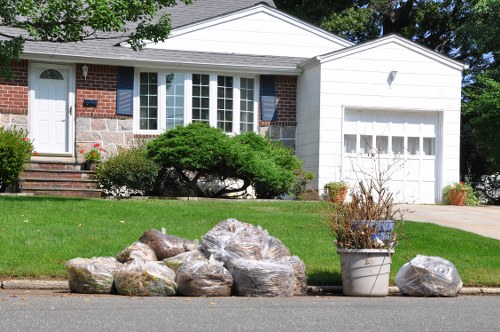
Garden waste removal is useful when the main issue is not a full redesign but the presence of loose material that has built up after routine maintenance or a larger cut-back. We can remove piles of branches, hedge trimmings, grass cuttings and other green waste, helping the garden look more orderly without requiring you to move everything yourself. Where appropriate, the work can be grouped so that similar materials are handled together for easier loading and disposal.
Not every garden clearance is the same. Some jobs are mostly soft green waste, while others contain a mixture of cuttings, damaged containers and old outdoor clutter. Our service stays practical in either case, with attention on lifting, sorting and taking away what has been identified. If there are items you want to keep, it is best to set them aside before the clearance begins. That leaves the remaining load easier to assess and keeps the task focused on disposal rather than rearrangement.
Good planning also helps where the space is partly used for storage, play or access. A narrow path, a shared side return or a garden with steps may require a more considered method of removal, especially if the materials are bulky. The aim is to clear the selected waste in a way that suits the layout of the property and leaves the outdoor space easier to use afterwards.
Handling bulky items and mixed outdoor clutter
Some gardens contain more than organic waste. Old benches, broken tables, rusted frames, cracked plant pots and dismantled storage items can build up alongside normal garden debris. When that happens, the clearance becomes a mixed outdoor removal job rather than a simple green-waste collection. We can remove those awkward extras where they form part of the agreed clearance, reducing the need for separate arrangements. The service is still kept straightforward: identify what is going, and the work can be planned around it.
Bulky items often take longer to move because they are awkward rather than especially heavy. That includes items with wide surfaces, uneven shapes or loose parts that are hard to stack neatly. A sensible approach is to work from the largest objects down to the smaller waste, so the whole space becomes easier to manage. This is also the stage where it helps to decide whether anything can be dismantled, bundled or left ready to load in sections.
Useful clearance decisions before work starts
- Decide which items are staying and which are definitely going.
- Group green waste separately from bulky non-organic pieces if possible.
- Make access routes as clear as you can before the visit.
- Note anything unusually heavy, sharp or fragile.
- Tell us if there are loose piles, hidden waste or items under cover.
Garden clearance with disposal and sorting
Once the selected materials have been removed from the garden, they still need sensible handling. Disposal is not just a final step; it is part of how the clearance is managed from the outset. Different garden materials may need to be separated, especially where green waste sits alongside timber, metal, plastic or general outdoor rubbish. We keep the process practical by dealing with the load in a way that matches the material mix, rather than treating every item as if it were the same.
That approach matters when the garden contains a mix of tidy waste and awkward leftovers from previous projects. A few bagged cuttings may sit next to dismantled panels or tired outdoor fittings, and the job is to clear all agreed items without overcomplicating the process. In that sense, the clearance is both removal and sorting: moving what needs to go while making sure the site is left less congested and easier to use. If you are comparing options, a clear list of items will help.
For many customers, the practical outcome is simply having the outdoor area cleared enough for fresh planting, seasonal maintenance or general use. Others want to reclaim storage space or remove the remains of an old garden layout. Either way, it is better when the removal plan is based on the actual contents of the space instead of guesswork. Use the existing load as the starting point, then request a quotation that reflects what is there now.
About Kilburn
Kilburn is a long-established north-west London district that sits across parts of Camden and Brent, with the name used for both the wider area and the local high street corridor along Kilburn High Road. Historically it developed on a route that linked London with Hampstead and beyond, and it later became known for dense residential streets, varied housing stock and strong transport connections. The district’s character is shaped by a mix of late Victorian and Edwardian terraces, post-war additions and more recent infill, giving it a layered streetscape rather than a single architectural style. The area is served by Kilburn Underground station on the Jubilee line and by Kilburn High Road station on the London Overground, while nearby Brondesbury and West Hampstead add to the rail links.
The local landscape includes several green and open spaces that break up the urban fabric. Kilburn Grange Park, just to the west of the High Road, provides sports pitches and a well-used public park setting, while the wider neighbourhood is within reach of larger open areas such as Queen’s Park and Hampstead Heath. Kilburn also has a lively cultural history, with the Gaumont State Cinema building standing as one of its most recognisable landmarks; it opened in the 1930s and remains a notable feature of the local townscape. Alongside the main road, the area contains side streets, residential squares and mixed-use corners that reflect its long development as part of inner London. The result is a district with everyday activity, local character and a strong connection between housing, transport and public space.
Kilburn’s name has deep historical roots, appearing in records linked to an older settlement and manor landscape long before the modern urban district emerged. Over time, the area became more tightly woven into London’s growth, with road improvements, railway expansion and suburban building changing the pattern of land use. Today, it remains a place where older buildings, local shops, cafés and community facilities sit alongside busy transport routes. That combination gives Kilburn a distinct identity: urban, layered and still closely tied to the everyday geography of north-west London.
Garden clearance for small and larger loads

Some customers only need a modest amount of outdoor waste removed, while others have a much fuller garden that has been left untouched for a season or longer. The same service can suit both, provided the scope is set clearly. A smaller load might involve a few bags of cuttings and a couple of broken planters; a larger load could include multiple piles, heavy branches and a range of redundant outdoor items. The important thing is that the clearance is matched to the actual size of the job, not to a generic assumption.
For larger clearances, it can help to identify the material types first and then decide whether anything needs to be separated before removal. That may not take long, but it can make the work more efficient. Where a garden has become difficult to walk through, the clearance may begin with the most obstructive waste so that access improves as the job progresses. This practical method keeps the service organised and reduces unnecessary handling of items that are not part of the agreed load.
When a one-off clearance is the right choice
A one-off clearance is often suitable after pruning, seasonal tidy-ups, tenant changes or when the garden has accumulated too much material for ordinary weekly maintenance. It is also helpful when the outdoor area needs a reset before you decide on new planting, paving or layout changes. In those cases, the task is to remove the existing clutter cleanly so the next stage can begin with a clearer space. If that sounds like what you need, take a moment to request a quotation.
Access, loading and practical arrangements
Clearance work is often easier when the route from the garden to the loading point is understood in advance. Steps, narrow gates, side passages and shared entrances can all influence how the removal is carried out. None of these features prevent a job from being done; they simply shape the best way to move the waste safely and efficiently. A short description of the access is usually enough to help us plan the work sensibly and avoid unnecessary delay.
It can also be useful to know whether materials are already bagged, stacked or spread out. Bagged waste is easier to handle in one way, while loose cuttings, branches or broken items may need a different approach. The more clearly the garden contents are described, the easier it is to set expectations for the clearance itself. If there are objects hidden behind sheds, under tarpaulins or in corners that are difficult to reach, mention them before the visit so they can be included in the plan.
Why a clear scope makes garden clearance easier
A clear scope keeps the service focused and avoids confusion about what is included. That is especially useful in gardens where useful items, decorative pieces and actual waste sit close together. By separating the two in advance, you make it easier to remove only what should go and to leave the rest undisturbed. The result is a more precise job, whether the clearance is for tidying, renovation or a complete outdoor reset.
It is also helpful when the garden includes mixed materials that may not all be obvious at first glance. Some items are light but bulky, some are compact but heavy, and some are awkward because of shape rather than size. A clear description makes those differences easier to handle. Tell us what needs removing, note any access concerns, and we can shape the quotation around the real work rather than a rough guess. That keeps the process direct and sensible.
If you are ready to move forward with garden clearance in Kilburn, the next step is simple: ask for a quotation and outline the waste you want removed. We will use that information to assess the likely scope and respond with a practical estimate. The goal is a tidy, manageable outdoor space with the unwanted material taken away in a straightforward, organised way.